Off by a beat: the effects of temporal misalignment in reinforcement learning for sepsis treatment
Abstract
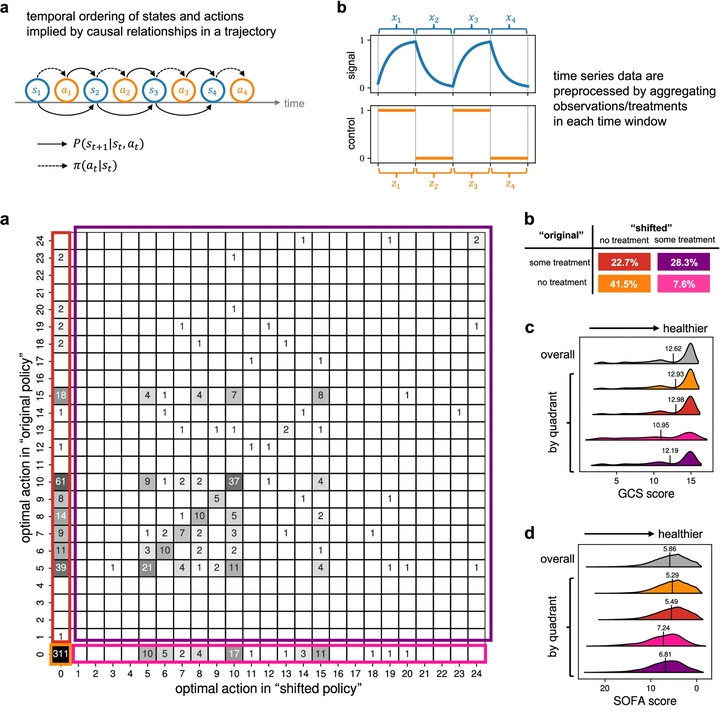
Reinforcement learning shows promise for guiding sequential clinical decisions, yet common data preprocessing introduces temporal misalignment that violates causal assumptions. Using sepsis management as a case study, we demonstrate that such misalignment produces inappropriate treatment recommendations in nearly half of patient states. This widespread methodological flaw affects over 80% of the literature but is obscured by inflated performance metrics. We propose a simple fix and advocate decision-centric problem formulations.
Type
Publication
npj Digital Medicine